- Positive emotions
- Negative emotions
- Neutral or mixed emotions
- Additional emotional adjectives
- Subtle or Rare Emotional States
- Unique Emotional States
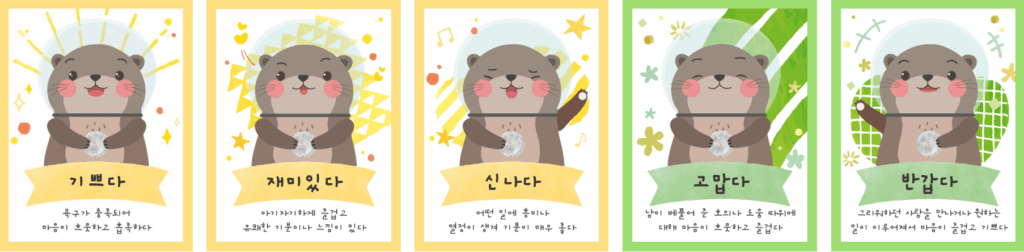
기쁘다 (gi-ppeu-da) – To be happy
재미있다 (jae-mi-it-da) – To be fun/interesting
신나다 (sin-na-da) – To be excited
고맙다 (go-mab-da) – to be thankful, to be grateful
반갑다 (ban-gap-da) – To be glad to see someone
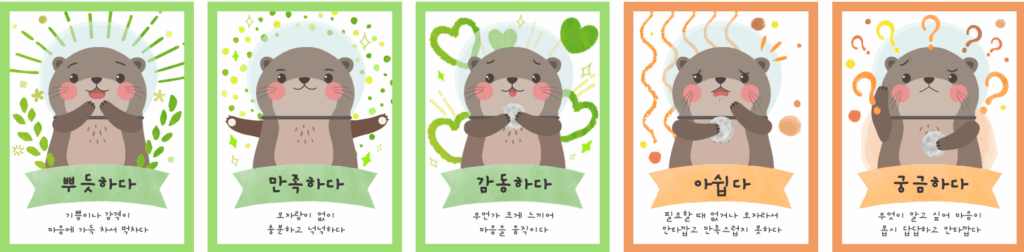
뿌듯하다 (ppu-deut-ha-da) – To be proud/satisfied
만족하다 (man-jog-ha-da) – To be satisfied, to be content
감동하다 (gam-dong-ha-da) – To be touched/moved emotionally
아쉽다 (a-suib-da) – To be sad about something that is imcomplete or lasted not long enough.
궁금하다 (gung-geum-ha-da) – To be curious, to wonder about something
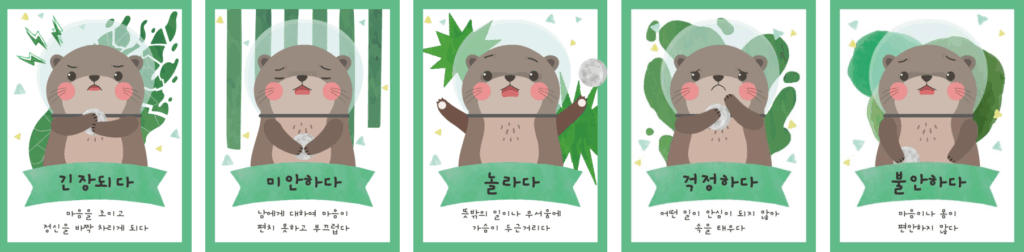
긴장하다 (gin-jang-ha-da) – To be nervous
미안하다 (mi-an-ha-da) – To be sorry, to apologize
놀라다 (nol-la-da) – To be surprised
걱정하다 (geok-jeong-ha-da) – To be worried
불안하다 (bul-an-ha-da) – To be anxious, to be uneasy, to feel insecure.
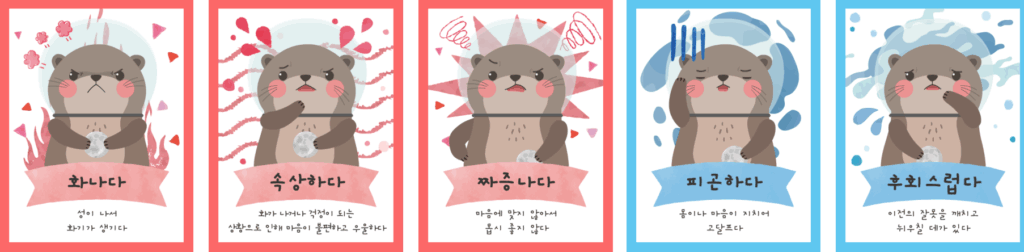
화나다 (hwa-na-da) – To be angry, to get angry
속상하다 (sok-sang-ha-da) – To be upset, to feel distressed
짜증나다 (jja-jeung-na-da) – To be annoyed, to feel irritated
피곤하다 (pi-gon-ha-da) – To be tired, to be fatigued
후회스럽다 (hu-hoe-ha-da) – To feel regretful. (adjective)
후회하다 (hu-hoe-ha-da) – To feel regretful (verb)
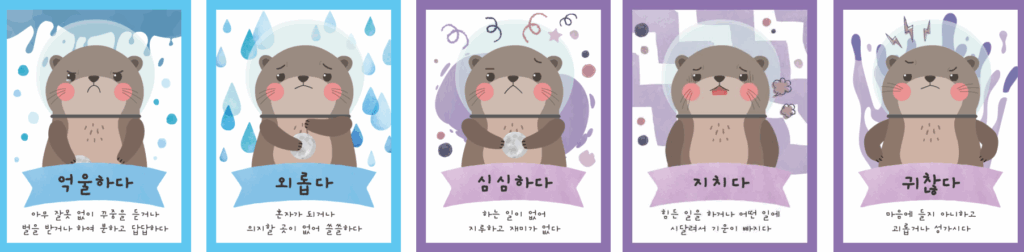
억울하다 (eok-ul-ha-da) – To feel unfairly treated
외롭다 (oe-rop-da) – To be lonely
심심하다 (sim-sim-ha-da) – To be bored
지치다 (ji-chi-da) – To feel exhausted, to feel worn out
귀찮다 (gwi-chan-ta) – To be annoying, to be bothersome
Positive Emotions
즐겁다 (jeul-geop-da) – To be joyful
행복하다 (haeng-bok-ha-da) – To be happy/blissful
감사하다 (gam-sa-ha-da) – To be grateful
신선하다 (sin-seon-ha-da) – To be fresh. To feel fresh.
사랑스럽다 (sa-rang-seu-reop-da) – To be lovable
자랑스럽다 (ja-rang-seu-reop-da) – To be proud
설레다 (seol-le-da) – To be fluttering (excited anticipation)
안심하다 (an-sim-ha-da) – To be relieved, to be reassured
활기차다 (hwal-gi-cha-da) – To be lively/energetic
자신감 있다 (ja-sin-gam it-da) – To be confident
유쾌하다 (yu-kwae-ha-da) – To be cheerful/pleasant
상쾌하다 (sang-kwae-ha-da) – To feel fresh/refreshed
만족스럽다 (man-jok-seu-reop-da) – To be satisfying
감미롭다 (gam-mi-rop-da) – To be sweet/mellow
희망차다 (hui-mang-cha-da) – To be hopeful
열정적이다 (yeol-jeong-jeok-i-da) – To be passionate
환희롭다 (hwan-hui-rop-da) – To be euphoric
포근하다 (po-geun-ha-da) – To be warm/cozy
달콤하다 (dal-kom-ha-da) – To be sweet (emotionally or taste-wise)
자유롭다 (ja-yu-rop-da) – To feel free
평온하다 (pyeong-on-ha-da) – To be peaceful
감격스럽다 (gam-gyeok-seu-reop-da) – To be deeply moved
낙천적이다 (nak-cheon-jeok-i-da) – To be optimistic
설렘이 있다 (seol-le-mi it-da) – To feel excitement (romantic or emotional)
안락하다 (an-rak-ha-da) – To be comfortable
Negative Emotions
슬프다 (seul-peu-da) – To be sad
우울하다 (u-ul-ha-da) – To be depressed
당황하다 (dang-hwang-ha-da) – To be embarrassed/confused
창피하다 (chang-pi-ha-da) – To be ashamed/embarrassed
초조하다 (cho-jo-ha-da) – To be nervous/impatient
허무하다 (heo-mu-ha-da) – To feel empty/meaningless
답답하다 (dap-dap-ha-da) – To feel frustrated
괴롭다 (goe-rop-da) – To feel suffering/distressed
불쾌하다 (bul-kwae-ha-da) – To feel unpleasant
한심하다 (han-sim-ha-da) – To feel pathetic/disgraceful
미치다 (mi-chi-da) – To feel crazy/frustrated
황당하다 (hwang-dang-ha-da) – To feel absurd/flabbergasted
비참하다 (bi-cham-ha-da) – To feel miserable
Neutral or Mixed Emotions
무섭다 (mu-seop-da) – To be scared
흥분하다 (heung-bun-ha-da) – To be excited/agitated
답답하다 (dap-dap-ha-da) – To feel frustrated/stifled
섭섭하다 (seop-seop-ha-da) – To feel disappointed
혼란스럽다 (hon-ran-seu-reop-da) – To feel confused
멍하다 (meong-ha-da) – To feel blank/out of it
놀랍다 (nol-lap-da) – To be astonishing
모호하다 (mo-ho-ha-da) – To be ambiguous/confusing
애매하다 (ae-mae-ha-da) – To be vague/uncertain
끈질기다 (kkeun-jil-gi-da) – To be persistent/stubborn
질투하다 (jil-tu-ha-da) – To be jealous
부러워하다 (bu-reo-wo-ha-da) – To envy
조심스럽다 (jo-sim-seu-reop-da) – To be cautious
고독하다 (go-dok-ha-da) – To feel deep loneliness
안타깝다 (an-ta-kkap-da) – To feel pity/regret
Additional Emotional Adjectives
부끄럽다 (bu-kkeu-reop-da) – To be shy
자신있다 (ja-sin-it-da) – To be confident
불행하다 (bul-haeng-ha-da) – To be unhappy
허전하다 (heo-jeon-ha-da) – To feel empty/lacking
낙담하다 (nak-dam-ha-da) – To feel discouraged
열받다 (yeol-bat-da) – To be furious
애틋하다 (ae-teut-ha-da) – To feel affectionate yet longing
Subtle or Rare Emotional States
속이 상하다 (sok-i sang-ha-da) – To feel hurt, to feel upset.
고요하다 (go-yo-ha-da) – To feel serene
엄숙하다 (eom-suk-ha-da) – To feel solemn
몽롱하다 (mong-rong-ha-da) – To feel hazy/dazed
애절하다 (ae-jeol-ha-da) – To feel deeply sorrowful
심각하다 (sim-gak-ha-da) – To be serious
한탄스럽다 (han-tan-seu-reop-da) – To feel deep regret
처량하다 (cheo-ryang-ha-da) – To feel desolate
오싹하다 (o-ssak-ha-da) – To feel a chilling fear
쓸쓸하다 (sseul-sseul-ha-da) – To feel lonely/sad
Unique Emotional States
후련하다 (hu-ryeon-ha-da) – To feel relieved after stress
애틋하다 (ae-teut-ha-da) – To feel deep affection and longing
분하다 (bun-ha-da) – To feel vexed
당혹스럽다 (dang-hok-seu-reop-da) – To feel perplexed
허탈하다 (heo-tal-ha-da) – To feel dispirited
자신없다 (ja-sin-eop-da) – To lack confidence
반성하다 (ban-seong-ha-da) – To feel deep reflection/regret
눈물겹다 (nun-mul-gyeop-da) – To feel deeply emotional (to the point of tears)
가슴 아프다 (ga-seum a-peu-da) – To feel heartbreak
애매모호하다 (ae-mae-mo-ho-ha-da) – To feel completely uncertain